
Human Resources Services
The Human Resources division of the Louisiana Department of Public Safety & Corrections is committed to employing a productive and diversified workforce that enables the Department to successfully achieve its mission. Under the direction of the undersecretary, the Headquarters Human Resources Division is responsible for developing policies and procedures that support all field human resources offices throughout the Department. Our goal is simple — attract and retain competent and skilled staff that will carry out our mission of providing public safety to the citizens of Louisiana.
LA DPS&C-Corrections Services does not discriminate on the basis of race, sex, religion, color, national origin, age or disability.
The Headquarters Human Resources Department:
- Provides human resources support to 10 (24 hour) institutions located statewide, DPS&C Administration, Prison Enterprises, and the Division of Probation and Parole.
- Supports the Department’s administration by providing information to assist in the implementation and monitoring of policies and procedures.
- Provides timely and accurate human resources services to all employees of the Department.
- Ensures personnel transactions comply with all federal and state laws and regulations.
- Assists managers and supervisors throughout the state with all human resource related issues.
- Participates in various state and national organizations to enhance our knowledge of critical human resources programs.
- Provides extensive training for employees to ensure knowledgeable and useful assistance in all facets of human resources.
Staff shares why you should work here.
Meet some of our team members to learn more about their experience and what they do everyday to serve Louisiana.
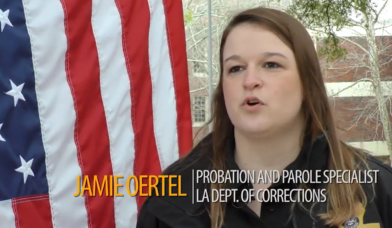
Probation & Parole Officers
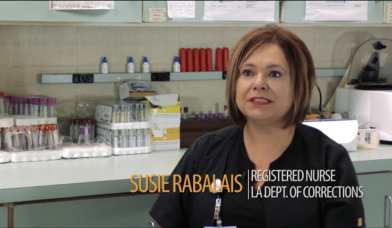
Nurses

Mental Health Professionals
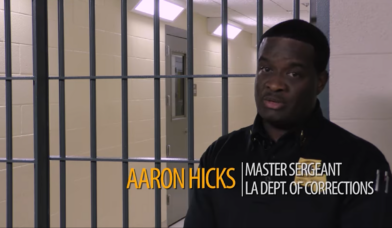
Correctional Officer

Correctional Officer
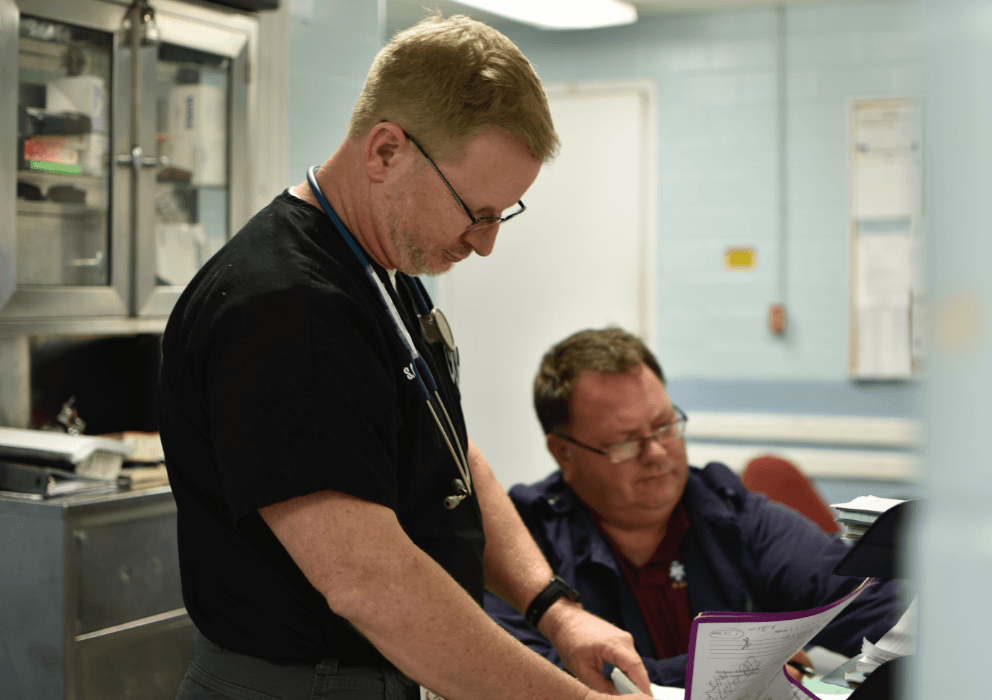
Find the right job for you.
The Louisiana Department of Public Safety and Corrections is looking for enthusiastic employees. Successful candidates should possess the following qualities:
- Sound judgment
- Strong ethics
- Self-motivation
- Pride in accomplishments
- People and communication skills
- Desire to make Louisiana a better place to live
The Louisiana Department of Public Safety and Corrections does not discriminate based on any non-merit factor to include disability.
Current Jobs at the Department of Public Safety & Corrections
Looking to become a corrections officer?
Consider a Career in Probation & Parole. Challenging. Rewarding. Life-Changing.
-
Overview & Qualifications It’s a side of law enforcement that many people don’t know much about – a career in probation and parole (P&P). P&P officers are committed to providing public safety statewide through the investigation and supervision of adults on probation or parole through the provisions of probation, parole, and pardon. Officers supervise people who have either been sentenced to a period of probation or who have been released on parole after serving a portion of their prison sentence. Officers are engaged in facilitating the returning resident’s adjustment and reintegration into society while ensuring justice and safety for the victim and the community by holding the returning resident accountable for his or her actions.
The job of a Louisiana P&P officer isn’t just about law enforcement, however. Officers truly make a difference by helping those trying to change their lives and better their communities. As returning residents reintegrate into society, it is the P&P officer who monitors their progress to help ensure they remain on the right path.
A career as a Louisiana probation and parole officer provides some of the most diverse work in the criminal justice system. It would not be unusual for an officer to start out the day in court, go on residence checks in the middle of the day, and end with a warrant sweep in tandem with other officers.
Potential job benefits include flexible hours, continued career training, certified training instructors with premium pay, and vehicles provided to perform official assigned duties, just to name a few.
Minimum Qualifications:
- A baccalaureate degree OR six years full-time work experience in any field or a combination of college hours and work experience
- US citizen or meet standards of US Naturalization and Immigration Service for employment
- No felony convictions
- No misdemeanor convictions for domestic violence
- Able and willing to carry firearms
- Not a candidate for or hold a political office
- Possession of a valid Louisiana driver’s license
- Willingness and ability to complete 14 weeks of a Police Officer Standards and Training (POST) academy and attain POST certification
- Able to pass a physical assessment in accordance with Cooper Fitness Standards
- Run 1.5 miles, sit ups, and push ups; required scores vary on age and gender of the applicant
- Undergo a pre-hire assessment and law enforcement suitability assessment
-
Salary & Benefits Starting Pay
Position PS Level Starting Salary Max. Salary
P&P Officer 1 PS 109 $44,241* $61,443
P&P Officer 2 PS 110 $47,340* $65,749
*This is a special entrance rate for probation and parole officer 1/2. If a candidate does not have prior employment with the state of Louisiana, the annual pay will be starting salary.
Benefits:
- Health insurance with optional family coverage (state pays 75% employee rate)
- Retirement plan through the Louisiana State Employee’s Retirement System (LASERS).
- Optional Deferred Compensation Plans
- Flexible work hours (40-hour work week)
- Minimum of nine paid holidays per year (often 11 or more)
- Earns and accrues annual and sick leave
- Civil service protection/regulated
- Issued equipment (pistol, bullet proof vest, laptop, etc.) and vehicle
- Up to 4% performance adjust annually (as budget allows)
- Training series eligibility (PPO 2 WITH 7% INC AFTER 1 YEAR)
- Retention opportunities (PPO 2 TO PPO 3 AFTER 3 YEARS WITH 10.5% INC).
- Promotional opportunities
Typically, P&P offices are open from 8:00 a.m. to 4:30 p.m. but officers (with approval) may work outside those hours as necessary to meet job requirements or to have some flexibility with family or other important responsibilities.
-
Duties & Responsibilities A probation and parole officer’s job is based in the community that they serve, working in and with the community to aid returning residents in becoming productive members of their communities. The job is part social work, part law enforcement.
When a returning resident is released from prison, it is the P&P officer that assists him/her with his/her transition back into society. This is done by identifying and addressing the needs of the returning resident so that he/she completes his/her supervision successfully without violations, new convictions, or returning to prison. The officer does the same with cases placed on probation. This is done by utilizing tools to assess returning residents’ needs and by working with community resource providers. While officers are given many tools to help returning residents become productive law abiding citizens, there will always be some individuals who aren’t open to changing criminal behavior. These returning residents pose a risk to the public safety and it is then that officers must perform their law enforcement duties.
The tasks of P&P officers vary from day to day. Officers are typically going to the residences of those on supervision to check on the well-being of the returning resident as well as their compliance with conditions ordered by judges or the Parole Board. A typical day may include speaking with judges, attorneys, people imprisoned at the local jail facility, treatment counselors, and other law enforcement personnel. An officer may spend time transporting a returning resident, investigating violations, testifying in court, and executing warrants. However, the main task of the officer is the face-to-face contact with returning residents and the documentation of those interactions.
Duties include:
- Monitor a caseload of adults on probation or parole for compliance with ordered conditions of supervision either from the parole board or the court.
- Assess people on probation or parole to determine their risk factor and develop a supervision plan.
- Motivate and manage people on probation or parole by using a sequence of sanctions and incentives.
- Identify the needs of people on probation or parole and assist in obtaining the proper referral to community services such as education/vocational training, substance abuse treatment, anger management, parenting classes, employment, or other resources deemed necessary to achieve successful completion of supervision.
- Conduct home visits and office visits with people on probation and parole and their families to keep communication channels open to assess social adjustment or detect personal problems and ensure compliance of special conditions.
- Prepare pre-parole investigations for the Committee on Parole to assist with the suitability of an imprisoned person’s parole plan and court ordered pre-sentence reports that compile information to assist the judge in ordering appropriate sentences.
- Investigate possible violations, impose proper sanctions or prepare correspondence to the court and/or Parole Board for the issuance of warrants and execute warrants when people on probation or parole do not comply with ordered conditions of release.
- Appear in court to testify in revocation hearings or present information regarding behaviors and compliance at review hearings.
- Prepare and conduct investigations through Interstate Compact Offender Tracking System (ICOTS) to transfer people under probation or parole supervision from one state to another.
- Determine ability to pay ordered monetary obligations and monitor the collection of this money.
- Administer alcohol, drug screen, and DNA samples to people on probation or parole.
- Serve on committees for the department or other agencies and collaborate with other law enforcement agencies to carry out the Department’s public safety mission (i.e. U.S. Marshals Task Force).
-
Hiring Process All probation and parole officer vacancies are posted on the Louisiana Department of Civil Service website. Simply select the “DPS&C – Adult Probation and Parole” box under the “Agencies” section.
- Candidates must create an account on the Civil Service website to register for the exam and receive a passing score to be considered. The Louisiana Office of State Civil Service offers six testing locations throughout the state. The PLE may only be scheduled once or twice a month (on Saturdays) in many locations. However, it is offered in Baton Rouge every day of the week, excluding weekends and holidays.
- Complete an application and apply for PPO 1.
- All applications will be reviewed for eligibility. Applications are sent to the district office to which the applicant is interested in applying (21 throughout the state).
- Applicants will be required to pass a physical fitness assessment (in accordance with Cooper Fitness Standards) and must sign a release of liability.
- Applicants must have their physician complete a physical fitness assessment form.
- The P&P District Office will complete a criminal background check on candidate.
- The P&P District Office will then schedule an interview with the candidate provided all of the above requirements are satisfactorily met.
- Candidate will then be required to undergo a full physical.
- Candidate will also be required to undergo a law enforcement suitability assessment.
-
Life in the Academy Upon being granted an employment offer, cadets will be required to report to their local District Office, Monday – Friday, until the next Academy starts, offered twice a year. Cadets are paid while waiting for the Academy to begin. The 14-week academy is located in Baton Rouge, La. During this time, cadets will reside in lodging provided by the Department from Sunday evenings through Friday afternoons. Your district office may issue you a state vehicle to commute from your district to the Academy. Cadets check out of the lodging on Fridays and check back in on Sunday afternoons. You will likely have a roommate of the same gender.
During the Academy, cadets will receive training and become certified in the following areas:
- Firearms
- Pressure Point Control Tactics (PPCT)
- Defensive Tactics
- Physical Fitness
- First Aid/ CPR
- OC Spray
- Peace Officers Standard Training (POST)
Failure to pass the certifications will result in termination from the Academy.
Cadets are required to participate in daily group physical fitness exercises and required to keep a daily log. Additionally, a typed notebook consisting of daily logs and classroom notes is required to be submitted at the end of the Academy.
While at the Academy, cadets are required to wear a uniform. The Department will issue two shirts for each cadet. Cadets will be responsible to purchase their own tan pants, black shoes, athletic shoes, navy athletic shorts, white t-shirts, spandex shorts to wear under shorts, and duty belt.
Each Academy has a president, vice president, historian, and chaplain – all elected by their fellow cadets.
For some, the toughest part about the Academy is being away from home. You will be away for three months, excluding much of the weekends, but we allow the use of technology such as Facetime/Skype to make it easier to adapt.
All meals are provided. Rooms are to be cleaned out every Friday when you check out. When the training day is over, cadets have free time until the start of training the next day. There are no curfews.
The Academy is very diverse with ages ranging from early 20’s to 40 plus, with both males and females. For some, this will be their first job while others will be working on a second career.
During defensive tactics training, cadets are taught to protect themselves against common types of resistance. Cadets are required to qualify and carry a firearm as well as to participate in all physical aspects of the Academy.
Instructors, largely comprised of highly-skilled, veteran P&P officers and supervisors from districts around the state, teach and help each cadet through the Academy. They are knowledgeable and eager to assist in any way they can. Cadets will be pushed to and beyond your limits, mentally and physically, in efforts to prepare you for the job that awaits you after the Academy.
You will have the opportunity to form lifetime bonds with your fellow cadets. Think of the Academy as one big family. You will be living with your fellow cadets for 14 weeks and you will get to know each other very well.
-
Continued Training Mandatory Continued Training:
- Each officer must re-certify with their firearm(s) annually. Each district will have a designated time to complete this recertification.
- All commissioned employees will go through 40 hours of inservice training annually, consisting of computer-based training, a day of First Aid/CPR, a Tactical Day, a Firearms/Range Day and a Defensive Tactics Day.
- All employees must complete LA Code of Governmental Ethics and the Sexual Harassment online courses annually.
- All officers must go through continuous training throughout the year on firearms and defensive tactics.
- All officers are trained in Motivational Interviewing.
Elective Continued Training:
- Various courses through the Comprehensive Public Training Program (CPTP).
- Victim-offender dialogue facilitator courses.
- Opportunities to become a First Aid Instructor, a Fire Arms Instructor, and/or a Defensive Tactics Instructor.
- Endless elective training opportunities offered through the Department of Corrections, as well as numerous outside organizations.
Probation & Parole FAQs
-
What is the difference between probation and parole? Both terms refer to community supervision of formerly imprisoned people by officers employed as probation and parole officers. Probation is afforded to certain individuals after pleading guilty and receiving a deferred or suspended sentence. Probation is under the jurisdiction of the court and sentencing judge. Parole is supervision of individuals who have served a portion of their sentence in prison and are released on parole. The jurisdiction of people on parole falls under the Committee on Parole. An individual on parole has served prison time for their conviction while someone on probation has not.
-
What is the average number of cases supervised by an officer? There are many variables that affect caseload size and therefore it varies somewhat from district to district. A small caseload consists of 120 cases. While this may seem high, officers utilize a risk/needs assessment to determine which cases need more resources. Cases are then assigned a supervision level in order to assist the officer with prioritizing their time.
-
What are the requirements to be an officer? Applicants must have a baccalaureate degree or a combination of work experience and college credit, a valid Louisiana driver’s license, a willingness and ability to handle and carry firearms, and willingness and ability to complete the Police Officers Standards and Training (POST) Academy. An applicant convicted of a misdemeanor crime of violence or a felony, or who is under indictment on a felony charge will be disqualified until relief from the disabilities imposed by the state and federal laws is granted.
-
Do officers receive training? Yes. Officers are required to attend a 14-week Academy located in Baton Rouge to obtain their POST certification. Housing and meals are provided Monday through Friday while in the academy. Once graduated, officers will be required to complete 240 hours of on-the-job training by a senior staff member. Officers are then required to complete 40 hours of in-service training. This annual training includes: firearms, defensive tactics, tactical survival, CPR/First Aid, and various miscellaneous training. Officers are also required to attend an additional 16 hours of firearms and defensive tactics training each year.
-
What is the starting salary for an officer? $3,686.80 monthly or $44,241.60 yearly. Please refer to the Salary and Benefits section above for more information.
-
What are normal working hours? Is it required to work nights and weekends? Each district office is open from 8:00 am to 4:30 pm Monday through Friday. Once training requirements are fulfilled, officers are afforded the ability to work flexible hours. Each officer must report to the district office twice a week during business hours. Officers are afforded three days a week to conduct their field duties. Hours worked on these days can be flexible and at the discretion of the officer, with approval from their supervisor.
-
What vacation benefits are provided? Officers earn leave based on time of service. For the first two years of employment, officers earn approximately 1 day per month of annual leave and 1 day per month of sick leave. After 15 years of service, officers earn leave at the rate of 2 days per month of both annual and sick leave. This leave can be saved and carried from year to year.
-
What if I am in the military? The Division of Probation and Parole is supportive of those with military obligations. Up to 15 days of paid leave is provided in meeting the military obligations.
-
What are the retirement opportunities? Retirement as a P&P officer is a pension as opposed to a 401K plan offered by private businesses. Officers can retire after 25 years of employment at any age and can begin drawing from their retirement at age 50. The accrual rate is 3.3 percent for each year of service. As the job is classified as hazardous duty, this accrual rate is higher than the 2.5 percent earned by rank and file state employees. There are also retirement programs available such as Deferred Compensation Plan. Various retirement options are available upon eligibility to retire.
-
What equipment will I be issued or have to purchase? Equipment issued to officers includes: handgun and holster, bullet proof vest, handcuffs, and baton. There is little need for equipment that is not issued or available for use by officers. Officers are also issued a laptop computer for utilizing the offender management system.
-
Does the state provide health insurance? The state of Louisiana provides various types of health insurance depending on the needs of the individual. Whether you are looking for health insurance for yourself or for your entire family, there are programs available. The state of Louisiana also pays 75 percent of the monthly health insurance premium. Miscellaneous insurance policies are also available such as dental, accident, cancer, life, etc.
Contact HQ Human Resources
Physical address:
504 Mayflower St.
Baton Rouge, LA 70802
Mailing address:
P.O. Box 94304
Baton Rouge, LA 70804
Phone: (225) 342-6620
Fax: (225) 342-3727
If you have any questions, comments, or concerns please feel free to call one of our trained and knowledgeable staff members:
Teresa Davis
Teresa.davis@la.gov
Human Resources Director
(225) 342-6620
Shaunda Jones
Shaunda.jones@la.gov
Human Resources Deputy Director
(225) 342-6620
Lisette Zaunbrecher
Lisette.zaunbrecher@la.gov
Human Resources Manager
(225) 342-6957
Britney Aymond
Britney.Aymond@la.gov
Human Resources Manager
(225) 342-2215