
Committed to Public Safety & Committed to You
Contact HQ
-
Mailing Address
P.O. Box 94304
Baton Rouge, LA 70804-9304 -
Phone
-
Physical Address
504 Mayflower Street
Baton Rouge, LA 70802 -
Fax
Our Offices
-
Adult Services
Phone
(225) 342-9711Fax
(225) 342-3349 -
Board of Pardons
Phone
(225) 342-5421Fax
(225) 342-2289 -
Committee on Parole
Phone
(225) 342-6622Fax
(225) 342-3701 -
Prison Enterprises
Phone
(225) 342-6633Fax
(225) 342-5556 -
Probation and Parole
Phone
(225) 342-6609Fax
(225) 342-3087 -
Legal Affairs
Phone
(225) 342-6743Fax
(225) 342-3278
About the Agency
The Department of Public Safety and Corrections consists of three main divisions:
Corrections Services oversees the custody and care of adults in prison and includes adults under probation and parole supervision.
Public Safety Services encompasses Louisiana State Police, the Office of Motor Vehicles, the State Fire Marshal’s Office and Highway Safety Commission.
Youth Service oversees the juvenile justice system in Louisiana.
The Secretary, who is appointed by the Governor, serves as the Department’s chief executive officer. The Corrections Services Deputy Secretary, Undersecretary, and Chief of Operations all report directly to the Secretary.
-
Office of the Secretary 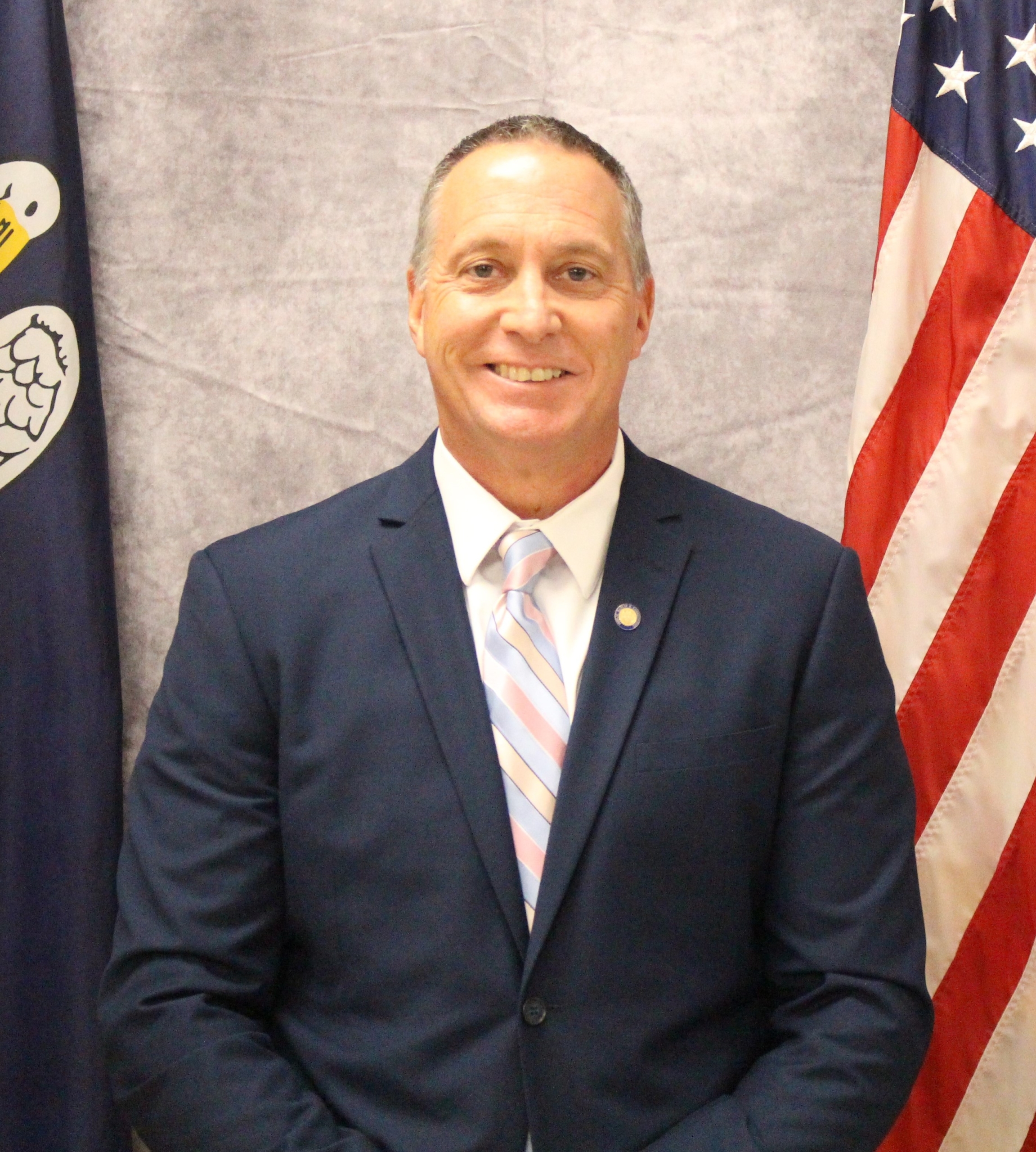
Secretary Gary Westcott is responsible for the functioning and control of all programs within the Department of Public Safety and Corrections. As the appointing authority, he works with leadership and staff to formulate rules and regulations, determines policy regarding management, personnel, and total operations. He leads and supports headquarters office and field unit staff, which are charged with carrying out the work of the agency.
A lifelong public servant, Westcott was appointed by Governor Jeff Landry in August 2024 to lead the Department, which is tasked with providing safe and secure incarceration, effective probation and parole supervision, and proven rehabilitative programs, as well as assistance to victims of crime, all with the goal of creating a safer Louisiana and reinvesting in our communities.
Westcott oversees an operating budget of roughly $1 billion dollars. He is responsible for a Department that employs close to 5,000 dedicated state civil servants who ensure the custody of more than 15,000 inmates at eight state-operated correctional facilities; along with the supervision of over 48,000 individuals across the state who are on probation and parole.
Westcott and with his leadership team are working to enhance programs across the Department that are having positive outcomes. He has implemented transformational changes that have led to the elimination of programs that did not yield impact or a return on investment for those served by the Department.
Most recently, Westcott along with numerous team members from a cross section of the Department directed efforts to finalize cooperative endeavor agreements and expedite renovations to Camp J, which is located on the grounds of Louisiana State Penitentiary. With support from Governor Landry and federal officials from the United States Department of Homeland Security’s Immigration and Customs Enforcement or ICE, the facility now referred to as Camp 57 houses illegal alien detainees.
Prior to his gubernatorial appointment as secretary, Westcott served as the Department’s Deputy Secretary, which began in February 2024. In this role, he oversaw the Division of Executive & Community Services. Westcott successfully restructured various divisions to improve outcomes and deliverables.
Westcott worked for the Department’s Division of Probation and Parole for 29 years. Throughout his career in Probation and Parole, he was a Pressure Point Control Tactics or PPCT Defensive Tactics Instructor at the Peace Officer Standards Training (POST) Law Enforcement Academy. In 2020, he retired as a Regional Administrator overseeing seven district offices from Lake Charles to New Orleans.
After leaving the Department, Westcott assumed the role of Corrections Warden at the Iberia Parish Sheriff’s Office from 2020-2024. Westcott honorably served in the Louisiana National Guard 199th Support Battalion and is a veteran of Operation Desert Storm. He is a graduate of University of Southwestern Louisiana and St. Martinville High School.
Since 2017, Westcott has been the Head Volleyball Coach for Catholic High in New Iberia. He and his wife are residents of Iberia Parish and have two children.
-
Division of Administrative Services Under the authority of the undersecretary, the Division of Administrative Services provides management support to all units in activities involving fiscal management, grant administration, information services, food services, maintenance and construction, performance audit, procurement and contractual review, human resources, and the Prison Enterprises Division. The undersecretary serves as chief of staff for headquarters operations and, as such, coordinates policies and addresses organizational issues that impact the Department.
-
Division of Executive & Community Services Under the authority of the Deputy Secretary, the Division of Executive and Community Services are managed, including Legal Services, Crime Victim Services Bureau, Internal Audit, and the Office of Offender Reentry. The Deputy Secretary’s Office also represents the Department’s support of community service and philanthropic initiatives (i.e. Combined Charitable Campaign, Keep Louisiana Beautiful, American Heart Association, Correctional Peace Officer Foundation, etc.). The deputy secretary serves as the Department’s custodian of records and as the central point for all public records requests, in addition to any other duties and functions assigned by the secretary.
-
Division of Policy Research and Review -
Division of Prison Operations Under the direction of the chief of operations, the Division of Prison Services provides administrative oversight of and support for the operational programs of the adult institutions and provides technical assistance to local jail facilities. The chief of operations leads and directs the Department’s operational audit teams, which conduct audits of all adult institutions, non-secure contract facilities, and community work release centers and assists all units with matters relative to the maintenance of American Correctional Association (ACA) accreditation. OAS staff support the Administrative Remedy Procedure and disciplinary appeal processes, screen and recommend imprisoned people for participation in work release, and maintain central office ACA accreditation. There are eight adult institutions under the broad authority of chief of operations.
-
Division of Organizational and Career Development Under the Office of the Undersecretary, the Division of Organizational and Career Development (DOCD) is responsible for effectively developing a qualified workforce at all levels of the organization and is committed to continually fostering an inclusive environment for staff. DOCD works to positively impact the operational effectiveness, learning and workplace culture within the Department through a data driven approach that aligns with the Department’s mission. Primary duties include oversight of the following areas:
- Employee Training and Career Development
- Employee Recruitment and Retention
- Employee Assistance
- Charitable Activities and Fundraising
- Employee Engagement
- Employee Wellness
The DOCD Director serves as Chair of the Recruitment, Wellness and Employee Engagement Committees. The committees are made up of DOC staff from Headquarters, Prison Enterprises, each state-run adult institution and each Probation and Parole regional area. Committee members give input, feedback and recommendations regarding department initiatives.
Initiatives of DOCD include, but are not limited to, conducting assessments, making recommendations and implementing action plans to create or revise policies and practices surrounding staff recruitment and selection, onboarding, professional and career development, annual training requirements, leadership development; and opportunities provided to DOC staff and stakeholders.
-
Division of Probation and Parole Under the direction of the deputy secretary, the Division of Probation and Parole functions as a community services division and is comprised of 21 district offices located throughout the state and a headquarters office in Baton Rouge. Probation and parole officers are POST (Peace Officer Standards and Training) certified and supervise adults in DOC custody who are released to the community on probation, parole, diminution of sentence, home incarceration, medical furlough, or supervised released. Officers also supervise formerly imprisoned people who relocate to Louisiana from other states. They ensure people on community supervision abide by the conditions of supervision, identify problems and solutions, make appropriate referrals, provide general counseling, and perform arrests as needed to protect public safety. Officers’ duties include visiting people on probation or parole primarily in their homes, at work, other places in the community, and in the office. The Division is actively involved in the Department’s efforts to reduce recidivism through a variety of programs such as administrative sanctions and Day Reporting Centers.
Officers in the Division also provide investigative services to decision makers in the criminal justice system, including judges, and the Board of Pardons and Committee on Parole. They also oversee the collection of victim restitution, supervision fees, and a variety of criminal justice fees.
-
Prison Enterprises Prison Enterprises operates a diversified group of industry and agriculture operations located at nine different correctional facilities throughout Louisiana. These operations provide work opportunities to approximately 1,000 – 1,200 imprisoned people in over 30 different industry and agriculture programs.
Today, there are approximately 18,500 people incarcerated in state correctional facilities. The mission of Prison Enterprises is to lower the costs of incarceration by providing productive job opportunities to people in prison that instill occupational and skills training while producing quality products and services for sale to state and local governments, non-profit organizations, political subdivisions, and others. Operation of Prison Enterprises’ programs serves to further the Department of Corrections Reentry Initiative by enabling people in prison to increase their potential for successful rehabilitation and reintegration into society.
Prison Enterprises, a division of the Department of Public Safety and Corrections, operates a diversified group of industry, agriculture and service programs located at eight state correctional facilities throughout Louisiana. These operations provide unique work opportunities and job training for imprisoned people that may otherwise be unavailable. These jobs teach people in prison valuable skills as well as a work ethic and a sense of responsibility; all of which are vital for eventual re-entry into society and/or contribute to stability and security within the prison. The trades people in prison learn through Prison Enterprises’ operations include, but are not limited to sewing, carpentry, welding, various equipment operation, printing, embroidery, silk screening, and farming. People in prison with a Prison Enterprise’s job receive incentive pay. As established in Louisiana Revised Statutes, Prison Enterprises also pays incentive pay for all other imprisoned people who are working within the Department, thereby relieving that burden from the general fund.
-
Board of Pardons and Parole Act 714 of the 2012 Legislative Session, which became effective August 1, 2012, merged the duties, functions, and powers of the Board of Pardons with that of the Board of Parole, creating a Committee on Parole. Act 714 also expanded the membership of the Board of Pardons from five members to seven, with the additional 2 members serving at-large only on the Committee on Parole and who do not serve as a member of the Board of Pardons.
All members of the Board are appointed by the governor and are subject to confirmation by the Louisiana Senate. There are five members of the Board of Pardons. The Committee on Parole, a committee within the Board of Pardons, is composed of the five members of the Board of Pardons, and two at-large members appointed by the governor. The at-large members serve only as members of the Committee on Parole and do not serve as members of the Board of Pardons.
In addition to the appointed members, there is an ex-officio member of the Board. The warden, or in his absence the deputy warden, of the correctional facility in which the person is incarcerated serves as the ex-officio member. The ex-officio member is not a voting member nor is he counted for the purposes of the members necessary to take Board action.
The Board considers applications for pardon, sentence commutations, and restoration of rights and privileges of citizenship. All of the Board’s recommendations for clemency are forwarded to the governor for final action. There is no time limit within which the governor must take action on any recommendation for favorable consideration by the Board of Pardons.
The Committee on Parole is the sole authority for granting parole in Louisiana. It grants or denies parole to eligible imprisoned people and sets supervision conditions for people not only released by action of the Committee but also those released by diminution of sentence. The Committee also holds hearings for people under community supervision who are facing revocation for violating the conditions of their supervision.
In addition, the Board of Pardons & Committee on Parole oversee the Crime Victims Services Bureau (CSVB), which coordinates the registration and of notification to victims of changes in an imprisoned person’s status, training and education to staff and the community on the Department’s victims services in addition to supporting restorative justice initiatives. The CVSB is the central point for victim and victim related issues in the Department and also manages the Victim-Offender Dialogue (VOD) program.
Click here for more information on the Board of Pardons and Parole.
Not what you're looking for? Find the location closest to you.
Our Vision
The Louisiana Department of Public Safety & Corrections creates a safer Louisiana by providing correctional programs committed to the protection of the public; safety of our staff; security of people in prison; services to those victimized by crime; and opportunities for positive behavioral change in those remanded to our custody and/or supervision.
Our Mission
We achieve our vision through safe, secure prison operations and community correctional programs, development and implementation of effective criminal justice policies for Louisiana, and the provision of rehabilitative opportunities for imprisoned people that supports their successful transition into the community.
Goals & Priorities
Our goals and priorities are built around our Department’s commitment to public safety and rehabilitation and serve to guide our performance in carrying out our mission.
-
Safety of Staff and People in Prison We provide for the safety of staff and people in prison by maintaining an organized and disciplined system of operations. All employees are provided training on the principles of the Code of Ethics of the American Correctional Association to demonstrate our commitment to professional and compassionate service. Our employees conduct their duties and responsibilities with a high degree of integrity and a respect for the value and dignity of human life.
-
Provision of Basic Services We provide services relating to food, clothing and shelter. We are further committed to delivering quality and cost-effective health care services that maintain medical and behavioral health services during a person’s incarceration, and to prepare him/her for release by providing linkage to care in the community.
-
Opportunity for Change We promote moral rehabilitation through program participation and provide an environment for people in prison that encourages positive behavior change. On behalf of individuals demonstrating motivation for change and a desire to participate in programming, the Department seeks educational, rehabilitative, and productive work opportunities, either within the institution or in the community for individuals under supervision.
-
Opportunity for Making Amends Through the opportunities to work and volunteer in prison jobs and educational programs, make restitution, participate in community restorative initiatives, and communicate in victim-initiated victim-offender dialogue, people in prison are able to repair and/or learn from the harm caused by their crime. We believe that victims of crime have the right to an active role in shaping how their needs can be met.
-
Reentry We recognize the role of community participation and support in the successful delivery of our vision and mission. By using data-driven practices and following criminal justice reform legislation, we will safely reduce recidivism within Louisiana. We are committed to working with the public to reduce barriers and stigma faced by returning residents that hinder their successful reintegration upon their return to our communities.
Learn more about the Department’s reentry programs and hear the success stories of some of our returned residents who’ve integrated successfully back into Louisiana communities.